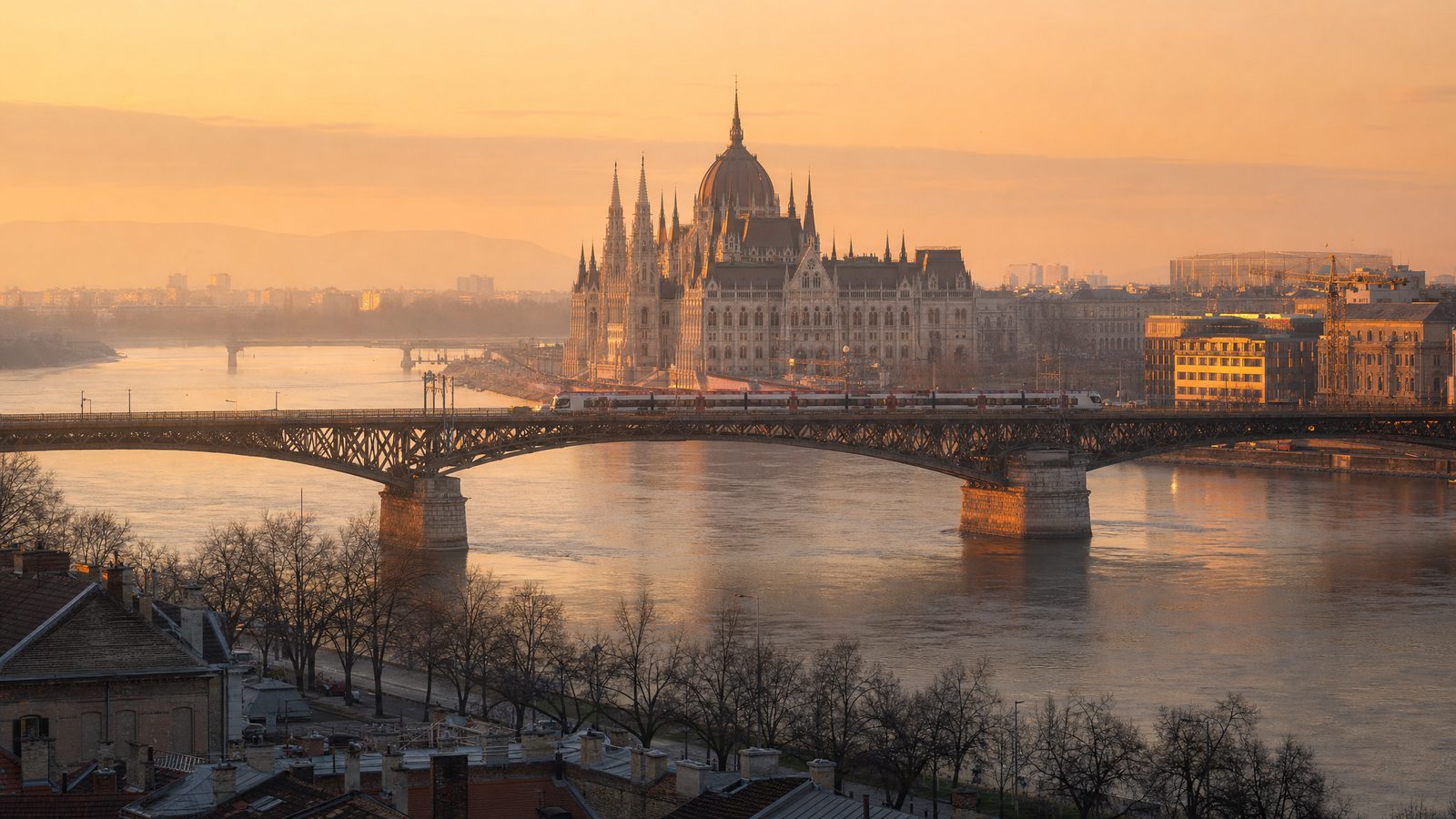
One line runs from the Danube's Hungarian bank, through Bratislava and the Moravian vineyards, into Prague's spires — crossing two international borders without a single passport check.
Three ways to cover the same line, at very different price points and comfort levels. Here's how they stack up.
| Service | Route | Duration | Frequency | 2nd class fare |
|---|---|---|---|---|
| Railjet / EuroCity | Via Bratislava | ~6h53–7h30 | Roughly every 2 hours | ~$23–75 |
| RegioJet | Via Vienna | ~6h20–7h | Up to 3 direct daily | from $22.70 |
| Metropol (EuroNight) | Via Bratislava, overnight | ~12h43 (19:30–08:13) | 1 nightly departure | from $55 (couchette) |
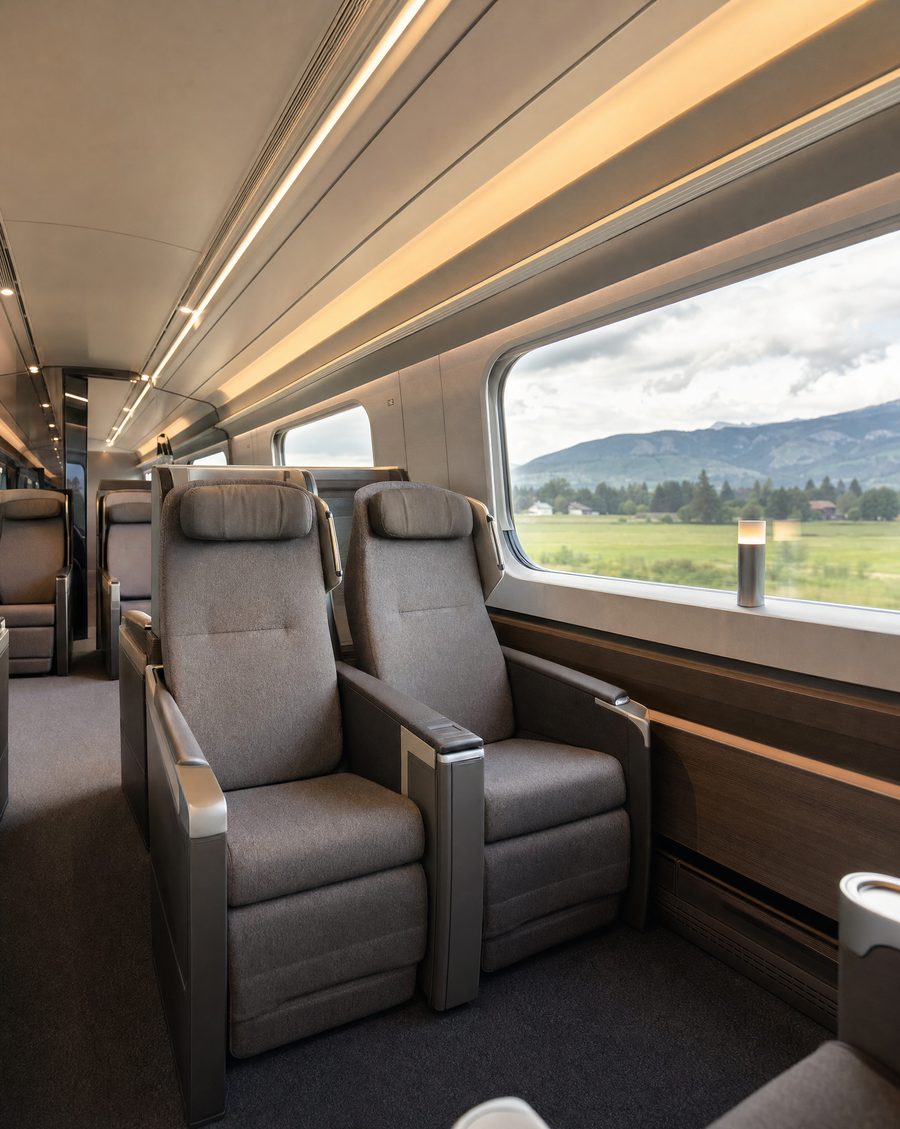
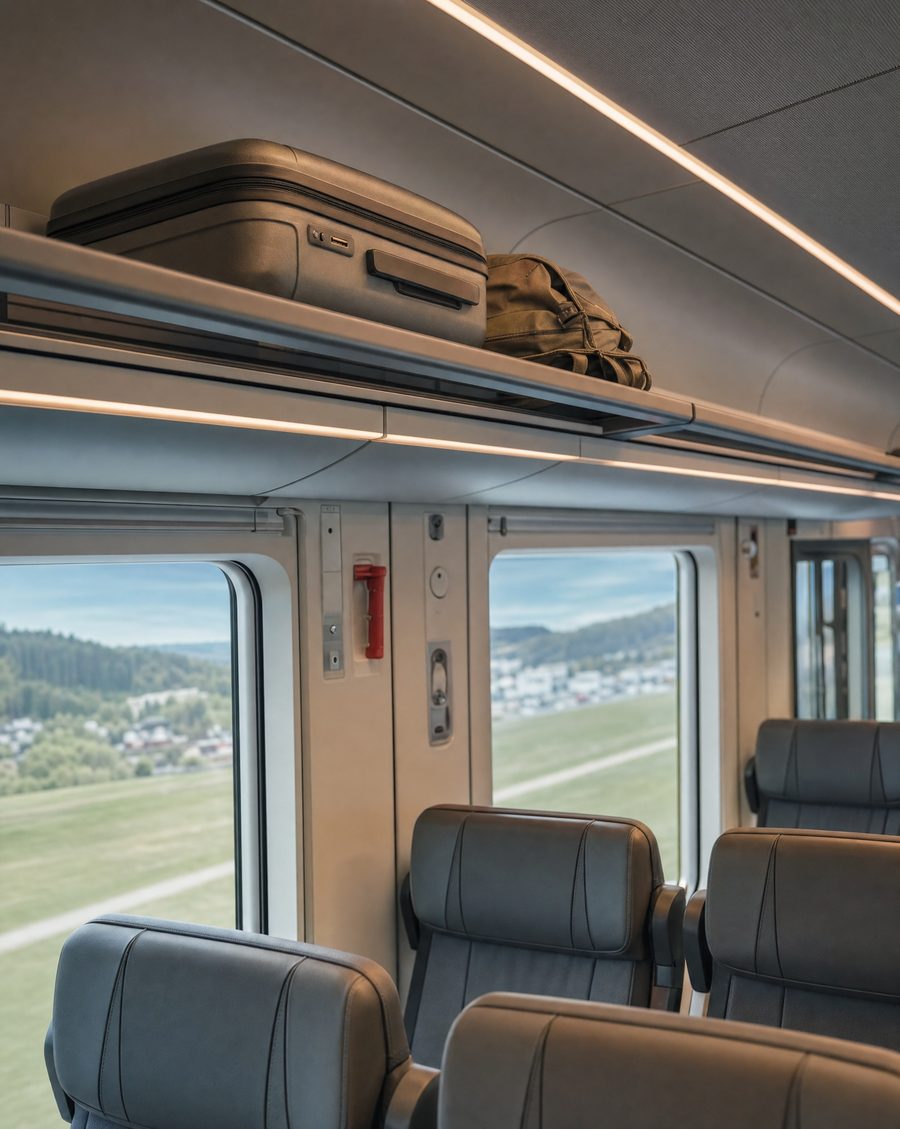
RegioJet sells its Budapest-Prague run in four tiers. The Railjet/EuroCity side of the line answers with its own comfort upgrade: newer Railjet and ComfortJet sets bring free WiFi, power sockets at every seat, and a restaurant car, while older EuroCity stock still runs a simpler café-bar service.
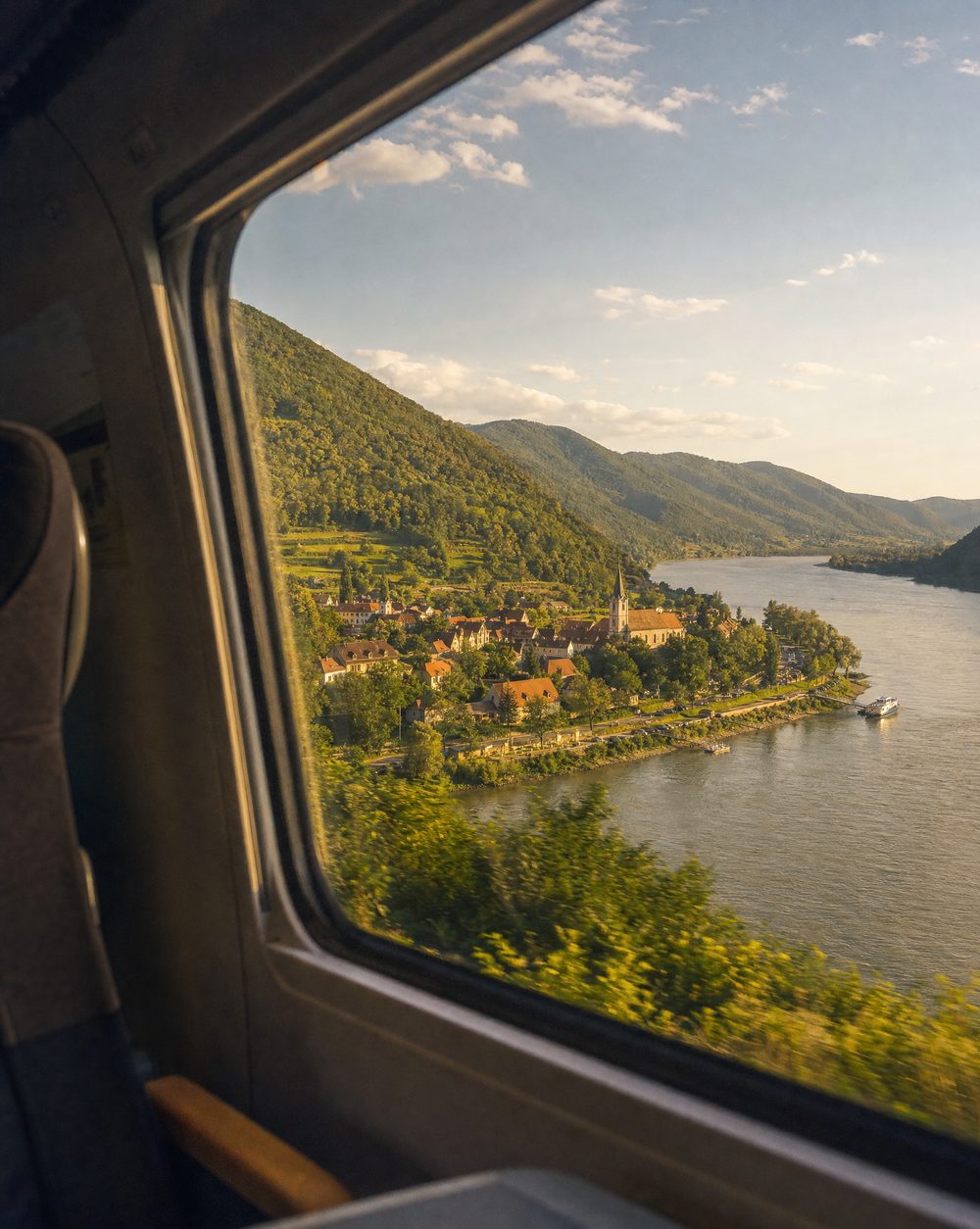
Heading out of Budapest, the Bratislava-routed train tracks the Danube for the best part of an hour before crossing into Slovakia. Pick your side accordingly.
Sit on the left as you leave Budapest and you'll track the Danube for much of the run up to Vác and on toward the Slovak border — wide river bends, riverside villages, and the odd castle ruin on the hills above.
Once past Štúrovo the river peels away and the views turn to open Slovak farmland on the way to Bratislava.
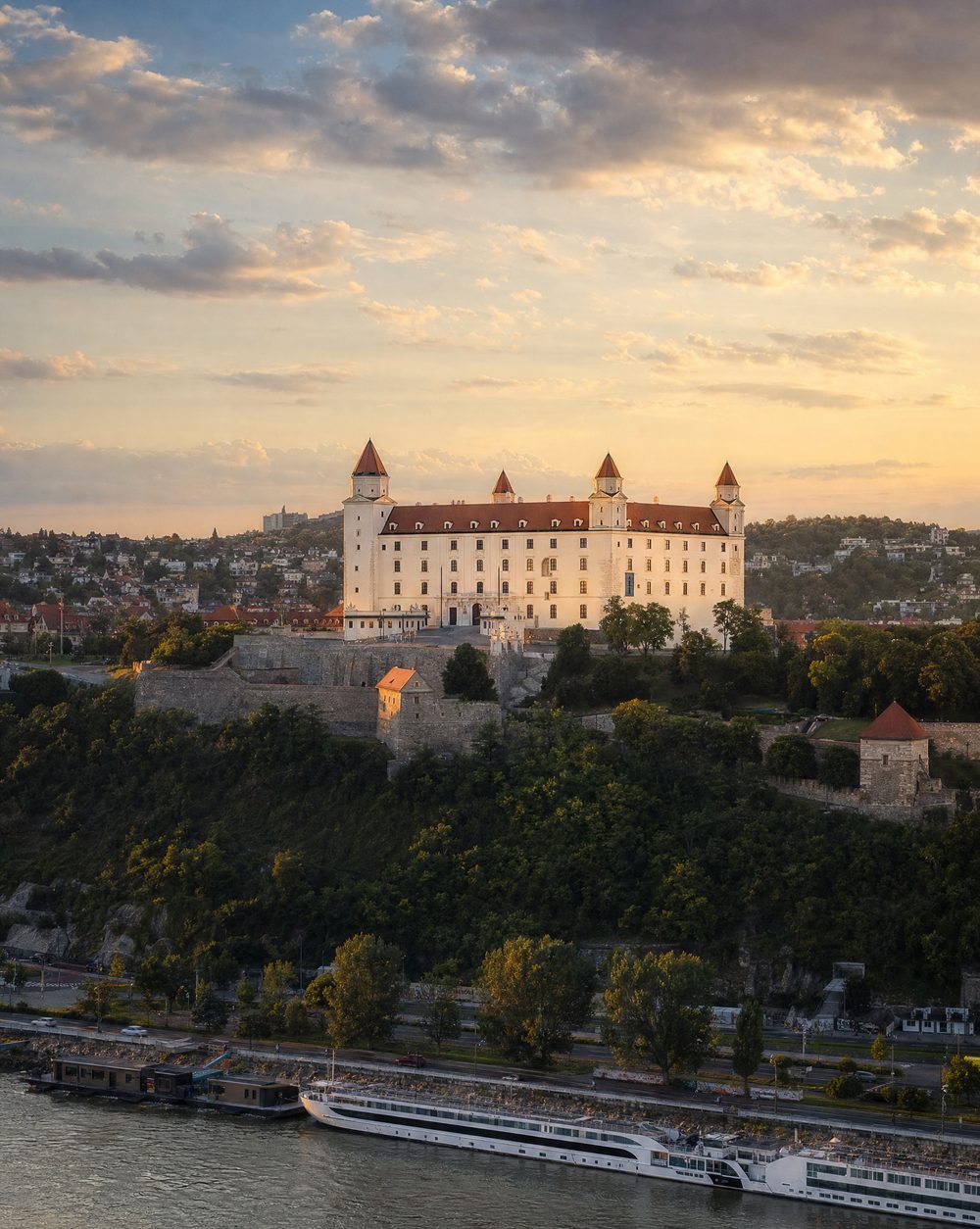
Coming from Prague, look left as the train pulls into Bratislava for a clear view of the castle on its hilltop above the river, before the Danube panorama opens up again on the final stretch into Budapest.
Hungary, Slovakia, and the Czech Republic have all been part of the Schengen Area since December 2007, which means this train crosses two international borders — Hungary into Slovakia at Štúrovo, and Slovakia into the Czech Republic near Kúty and Břeclav — without stopping for border control.
No uniformed border guards walking the aisles, no stamps in your passport, no scheduled stop to check documents — the train just keeps moving. Ticket inspectors still check your ticket along the way, which is a separate thing entirely from border control.
Schengen removes routine border checks, not the requirement to carry ID. Bring your passport or, for EU citizens, a national ID card — spot checks do still happen occasionally, especially near the Slovak and Czech borders.
Both are grand, historic, city-center stations — click either one for exactly which platform gets you there.
Railjet and EuroCity trains toward Bratislava and Prague leave from Nyugati, a grand 19th-century glass-and-iron train shed in central Pest. RegioJet's Vienna-routed departures use Budapest-Déli instead, on the Buda side — check your ticket before heading to the wrong side of the river.
Most Budapest services end at Praha hlavní nádraží, a short walk or metro ride from the Old Town. A handful of departures instead use Prague Holešovice, further from the center — check your ticket's exact arrival station.
Bratislava and Brno both sit directly on the line, so a lot of travelers turn a single long ride into a two- or three-stop trip instead of riding it end to end.
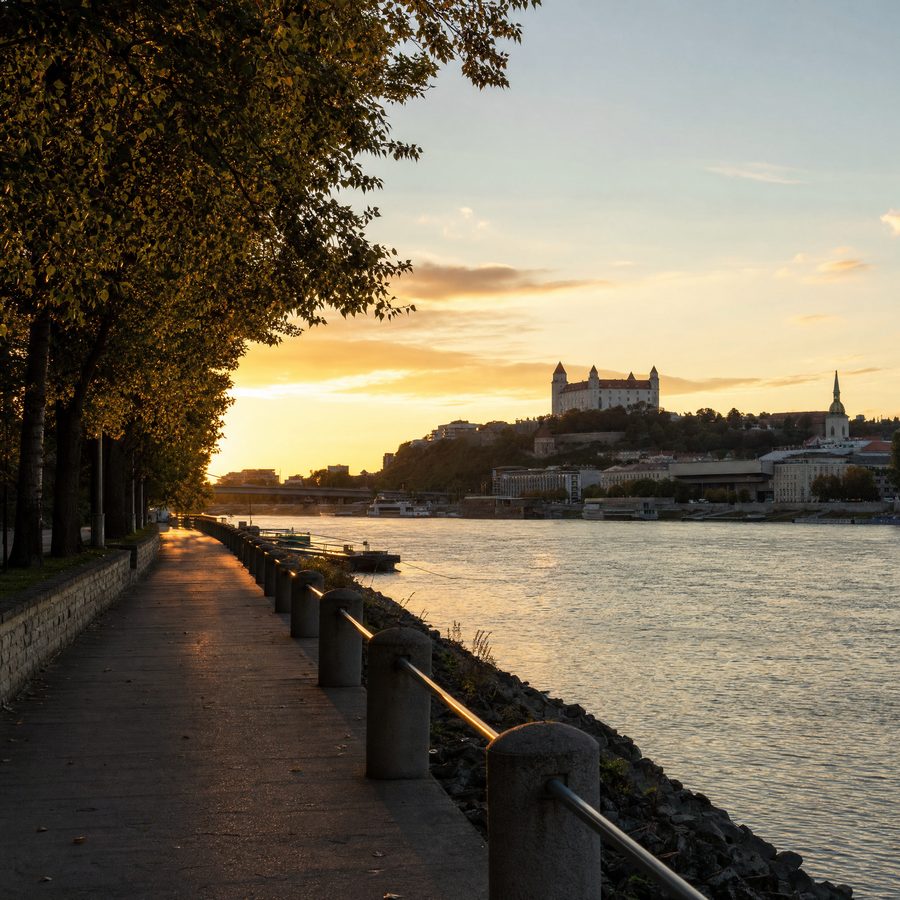
The hilltop fortress overlooking the Danube, a short uphill walk from the Old Town, with panoramic river views from its terrace.
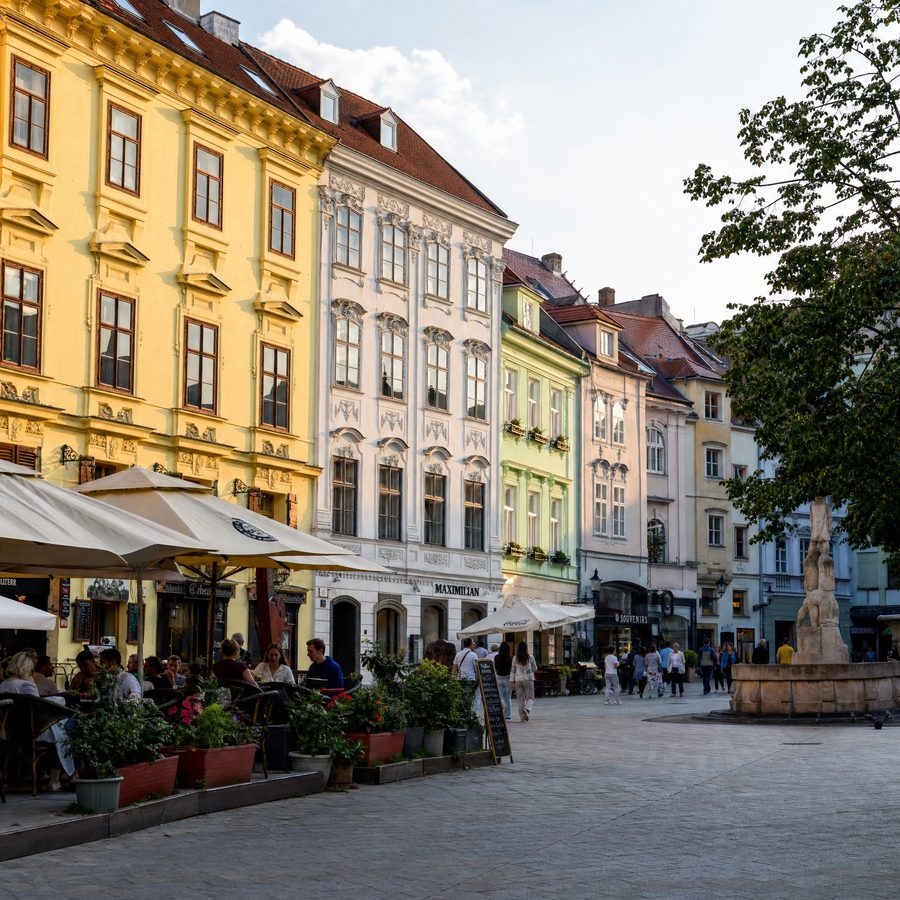
Baroque facades, café terraces, and narrow cobblestone lanes make up the compact historic core.
A flat, easy walk along the river with the castle rising above and river cruise boats docked below.
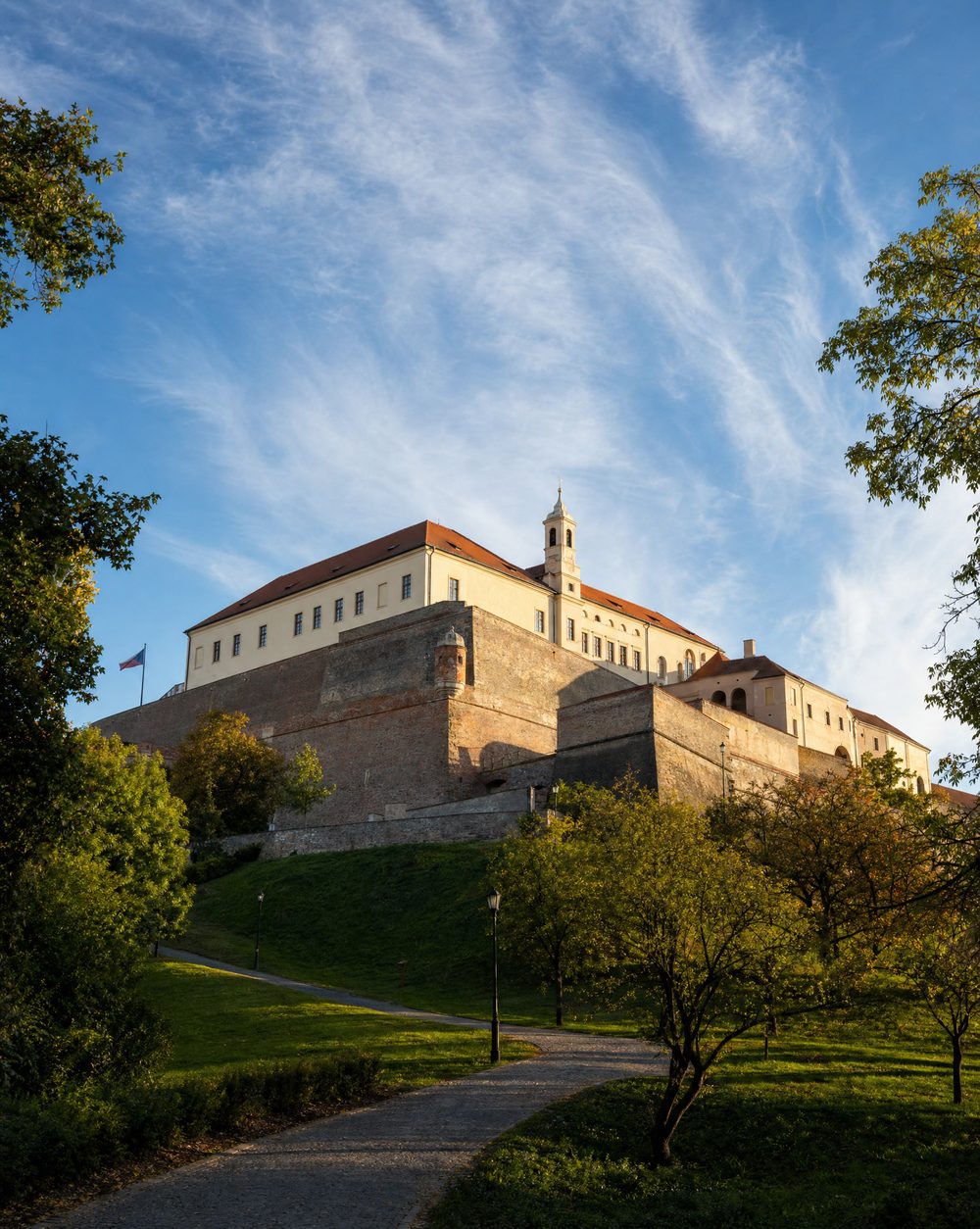
A hilltop fortress-turned-park with sweeping views over Brno's city center.
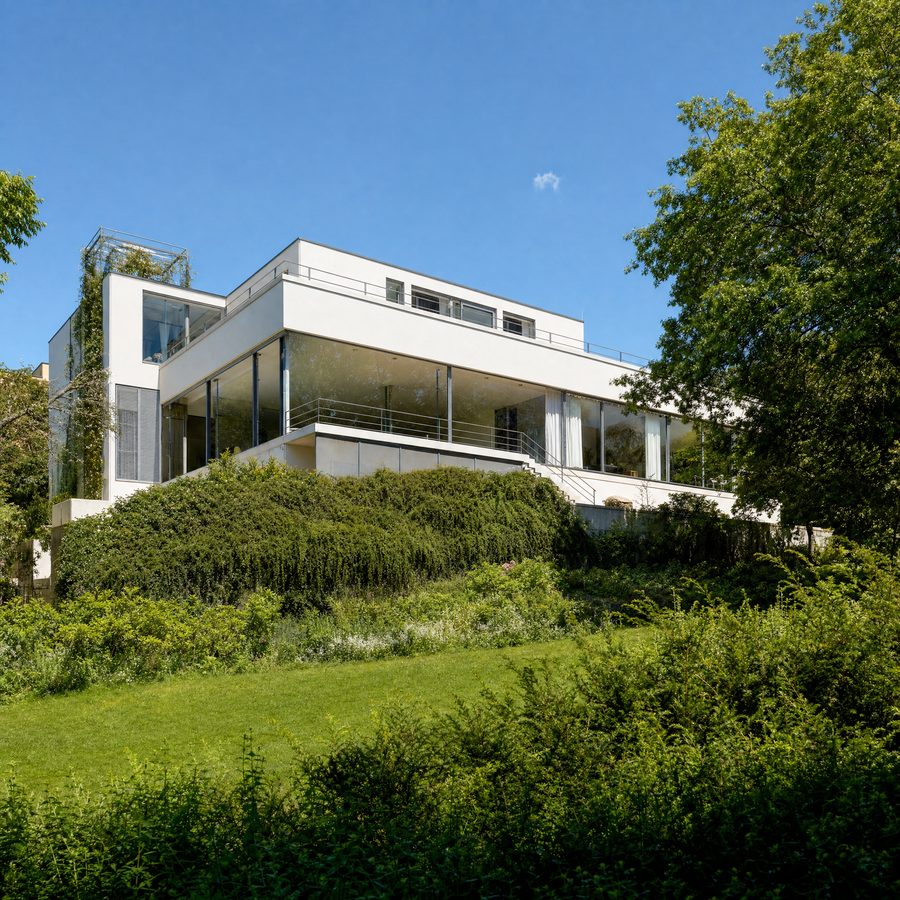
A UNESCO-listed modernist house from 1930, one of the most influential residential designs of the 20th century.
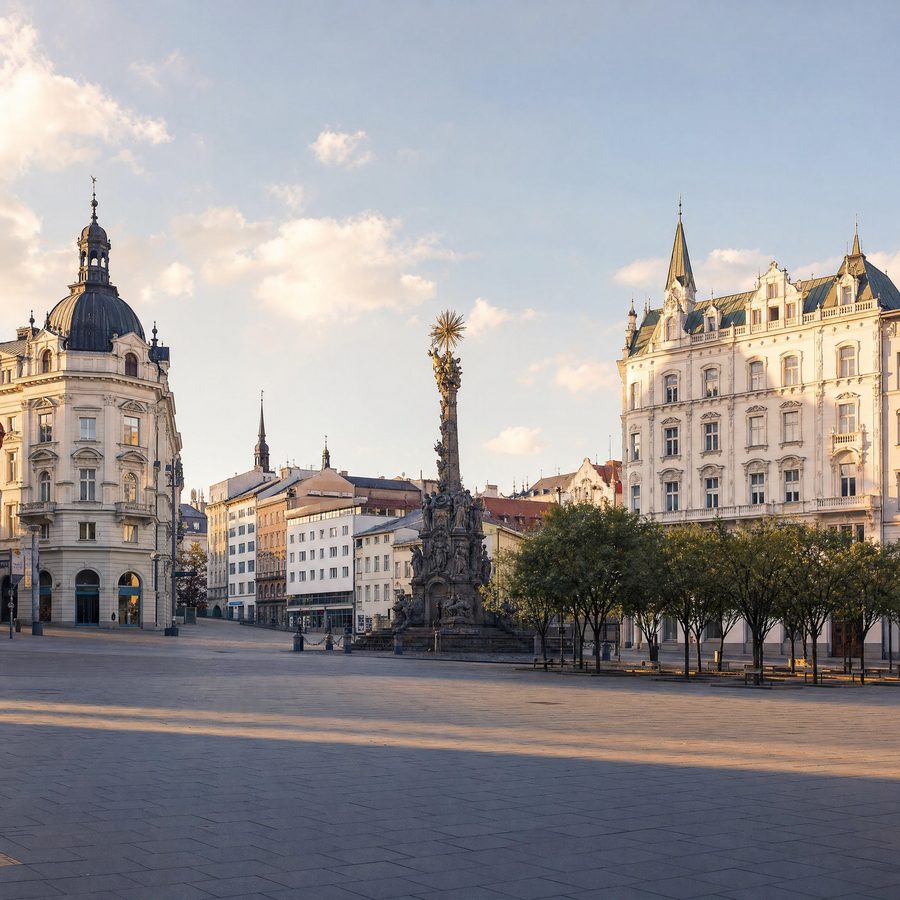
The city's central plaza, ringed by historic facades and a good starting point for exploring on foot.
Neither operator runs a strict checked-bag system like a budget airline — here's what actually matters.
Standard-sized luggage fits easily in the overhead racks or the dedicated luggage areas near carriage doors on both RegioJet and Railjet/EuroCity trains.
Unlike short-haul flights, neither operator publishes a strict size or weight limit for train luggage — if it fits in the racks or by your seat, it travels with you.
Bikes, skis, or anything unusually large are best confirmed with the specific operator before travel, since space and any extra fee vary service to service.
Advance tickets on both the Railjet/EuroCity route and RegioJet run noticeably cheaper than day-of purchases. Popular midday and evening departures in summer can sell out their cheapest tiers first.
Unlike some shorter regional routes, a seat reservation typically comes bundled with your ticket on this line rather than being a separate optional add-on.
Nothing stops you from riding RegioJet one direction and Railjet/EuroCity the other, or breaking the journey in Bratislava on one ticket type and continuing on a different operator the next day.
You'll cross from the Hungarian forint zone into the euro (Slovakia) and then the Czech koruna — worth having a card that doesn't charge foreign transaction fees for any on-board or station purchases.
Hungary, Slovakia, and the Czech Republic all run on Central European Time, so unlike the currency, at least your watch doesn't need adjusting.
Both RegioJet and Railjet/EuroCity tickets can typically be exchanged or refunded before departure for a small fee — check the exact terms attached to your specific fare when booking.
It depends on the route. The Bratislava-routed Railjet/EuroCity service covers the roughly 525 km (326 miles) in about 6 hours 53 minutes at its fastest, stretching to around 7 hours 30 minutes on slower departures. RegioJet's alternative service via Vienna can be quicker on some runs, close to 6 hours 20 minutes, though it also has departures nearer 7 hours.
The quickest scheduled journeys run from about 6 hours 20 minutes to 6 hours 53 minutes, depending on whether you're on RegioJet's Vienna-routed service or the Bratislava-routed Railjet/EuroCity connection. Not every departure on either route is the fastest one, so it's worth checking the specific timetable.
RegioJet's Low Cost fares are the cheapest option, followed by its Standard class at around $22.70 one-way, and Czech Railways' advance-purchase fares on the Railjet/EuroCity route can start near $23 in second class. Prices climb toward $70-75 for full-flex second-class tickets bought on the day of travel.
No routine passport checks. Hungary, Slovakia, and the Czech Republic are all part of the Schengen Area, so the train crosses two international borders without a border-control stop. It's still sensible to carry a passport or national ID card with you while traveling.
The Bratislava routing, run jointly by Czech, Slovak, and Hungarian railways as Railjet or EuroCity, is the traditional path and runs directly through Slovakia's capital with Danube views along the way. RegioJet's Vienna routing swaps Bratislava for a stop in Austria and is a private, budget-friendly alternative with four fare classes.
Railjet and EuroCity services generally use Budapest Nyugati station, while RegioJet's Vienna-routed trains depart from Budapest-Déli. In between, trains call at Bratislava's hlavná stanica and Brno's hlavní nádraží, before arriving at Prague hlavní nádraží (Prague Main Station) or, on some services, Prague Holešovice.
Yes, on the Hungarian leg of the Bratislava-routed service. Heading from Budapest toward Prague, take a seat on the left-hand side of the train for river views along the Danube between Vác and the Slovak border.
Yes. The Metropol EuroNight sleeper departs Budapest Nyugati in the evening and arrives in Prague the next morning, with berths from around $55 for a 6-berth couchette up to roughly $200 for a single sleeper compartment, including a light breakfast.
Both cities sit directly on the Budapest-Prague line, so many travelers break the journey there for a few hours or a night before continuing on a later train. Stopover rules vary by fare type, so check the specific ticket conditions when booking.
RegioJet offers four classes on this route: Low Cost (basic reserved seating at the lowest fares), Standard (from about $22.70), Relax (from about $26.70, with extra space and a dedicated attendant), and Business (from about $31.20, private four-seat compartments with complimentary Prosecco).
Booking ahead isn't mandatory, but advance fares, especially Czech Railways' early-purchase tickets and RegioJet's earlier bookings, are meaningfully cheaper than tickets bought on the day, and seats can sell out on popular departures.
Yes. Newer Railjet and ComfortJet trains have free WiFi and power sockets at every seat plus a restaurant car, and RegioJet's Standard class and above also include WiFi, with Relax and Business adding more legroom and onboard service.
Compare RegioJet and Railjet fares, pick your window seat, and lock in the ride from the Danube to the Vltava.
Search trains & fares